

I Try to Be a Citizen
Yemenat
Mohammed Al Mekhlafi
In less than five months, I have visited Aden twice, and this is the third time. The reason has always been the same: the simplest right that a state is supposed to grant its citizens, a national ID card and a passport. Nothing more.
The journey repeats itself, but fatigue takes on a different form each time. The waiting becomes longer, nerves grow more exhausted, and the feeling deepens that one is being drained for no reason other than trying to be a citizen.

This time, I was not alone. I was traveling with my family. We left Sana’a at five in the morning aboard a minibus known as a Hiace. For nearly half an hour, it drove around collecting passengers from different places. We then set off after a quick breakfast at Al Musafer Cafeteria on Taiz Street. The cold was biting.
At the first checkpoint on the outskirts of Sana’a, we were stopped. Our ID cards were taken, our names recorded, and then returned quickly. After that, we passed the remaining checkpoints with unexpected ease until we reached Naqeel Yaslah.
There, the scene was different. Thick fog enveloped the place, and visibility was barely clear. We descended slowly, and at times the road disappeared beneath the clouds. We stopped near the city of Dhamar in the Rosaba area and got out to take a few photos, not for any particular reason except that the view deserved it.
The clouds were crawling along the ground rather than floating in the sky. It was a rare, silent, and awe inspiring sight. My children were amazed, as they had never seen clouds this close or this expansive. Ayham, my eleven year old son, kept repeating with innocent wonder that it felt as if we were in Europe.
We continued our journey through the scattered clouds until we reached the city of Yareem. There, we changed course toward the Aden Al Dhalea road, as it is the closest and easiest route for travelers. Gradually, the fog began to lift, and rays of sunlight slipped through the gray cover, revealing the road ahead.
By ten thirty in the morning, we arrived in Damt. We were stopped several times at checkpoints, with the same routine repeating itself. We would stop, answer brief questions, exchange passing glances, and then continue on our way.
When we reached Morais, we stopped at a restaurant for lunch. Everyone ate with the appetite of travelers except Ayham. He appeared exhausted by the long journey and was not yet accustomed to such distances. He sat silently in front of his food, did not touch it, and simply stared.
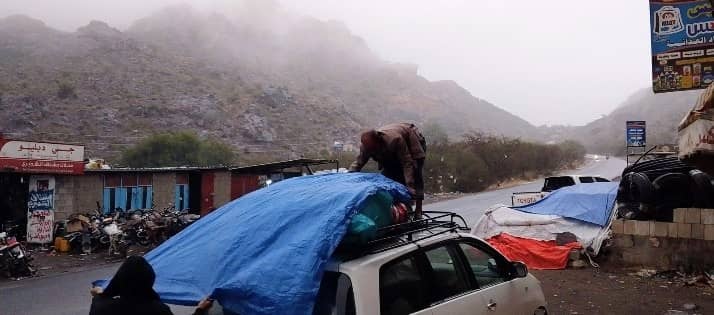
We returned to the bus to wait for the rest of the passengers who had gone out to buy qat. Then we set off again, continuing our journey under the scorching midday sun. At the entrance to the city of Al Dhalea, we were stopped at a checkpoint that closes at five thirty in the evening and does not reopen until six in the morning.
The bus was directed into a wadi, and we were ordered to get off. Our ID cards were collected, and the women were instructed to head toward a tent in the middle of the wadi, where they were searched by female soldiers.
After that, we moved on quickly. We passed through Al Dhalea and began to approach Lahj, but this time the inspections were more thorough and more severe. We were stopped again and questioned individually about the reason for our trip to Aden. Our phones were searched, and with every kilometer closer to the city, the scrutiny intensified.
Ayham kept asking the same question about when we would arrive in Aden. He was worn down by the long road and had not eaten since the previous night. Each time, I reassured him, telling him that we were close and that only a little distance remained.
At one point, a passenger answered his phone and said aloud that we were still in Lahj. Ayham turned toward me with angry eyes and asked if I was lying to him.
I forced a smile and found no answer except patience. We continued in this state until we finally reached Aden shortly before the Maghrib prayer.
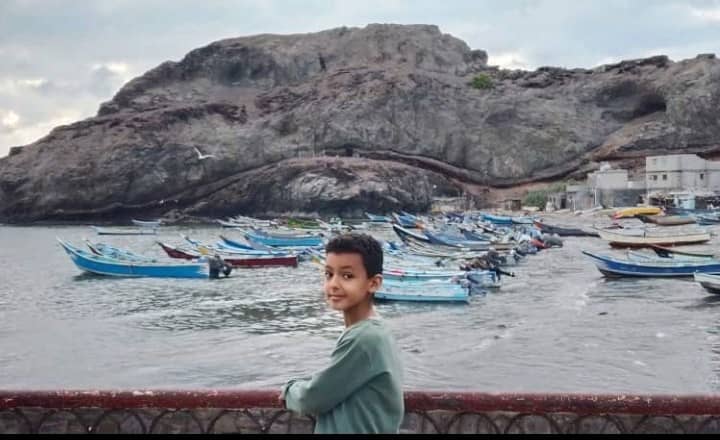
We got off the bus and hired a taxi to Crater. We walked along the coastal road, and for the first time my children saw the sea up close. They were captivated, staring in every direction. When we reached Khormaksar, the road was unusually crowded with traffic.
The taxi driver stopped at the entrance to Crater and asked if he could go fill up on gas, explaining that there was a severe gas shortage. I told him that we had just arrived from a long journey and were exhausted. He said he would be quick, but when he saw how long the line was, he decided to continue driving instead.
I contacted my friend Ali Shabeer to ask about hotels. He gave me several options, but they were all full. After multiple attempts, we settled on Nakhlat Aden Hotel.
When we entered the room, I asked Ayham what he wanted for dinner. He asked for fish zurbian. I went directly to Al Rayan Restaurant in the Al Midan neighborhood and brought back the meal along with Pepsi. We ate, and Ayham’s smile returned.
Later, I went out to the market with Ayham and Elyas, where I met my university friend Mohammed Shabeer and his brother Ali Shabeer. They welcomed us warmly, and we sat drinking Adeni tea at Sakran Café near their home in the Sheikh Abdullah neighborhood for about half an hour. We then returned to the hotel and fell asleep immediately.
We woke at six in the morning and went out to the street, where my friend Hafedh Al Tayyar was waiting for us near the passport office. He took us to a restaurant in Seerah, where we had a delicious breakfast of fresh fish.
After breakfast, we headed to the passport office. Hafedh was extremely helpful, and thanks to his assistance, we completed our procedures in less than half an hour. Everything appeared to be proceeding smoothly, except for my daughter Elaf’s file. She needed to obtain a national ID card before she could apply for a passport.
We began the ID card process at nine in the morning. I paid a man who promised to complete all the procedures within two hours. Elaf entered with her mother to wait for her turn, while I stayed outside with Ayham and Elyas, as that day was designated for women.
As time passed, the waiting grew longer. The man suddenly disappeared and turned off his phone. Elaf and her mother remained stuck inside until eight thirty in the evening, surrounded by crowds of women and the noise of the place. I tried to plead with the director and even forced my way inside, but without success. Her file was lost, and her photo was taken only at the very end.
The next day, we returned to obtain the official statement required to complete the passport application. Elaf waited in line for more than two hours before being told that the response had not yet arrived from the Yemeni consulate in Jeddah.
We returned to the hotel and tried again at one in the afternoon, but the waiting was repeated and the result was the same.
After the afternoon prayer, we went to the Abyan coast, a place I used to visit more than twenty years ago when I worked and studied in this city. I was shocked to find that the wide open space I remembered had been swallowed by buildings, and that the coast was no longer as it had been. It was dirty and filled with noise. We left and walked some distance until we found a spacious area, where we swam and spent a pleasant time.
The following morning, we returned once more to inquire about the official statement. After three hours of standing in line, Elaf was informed that it would not be ready until the following week.
We decided to return to Sana’a the next day. That afternoon, we went to the garden near Aden Mall at the entrance to Crater, close to the Hayel Commercial Complex.
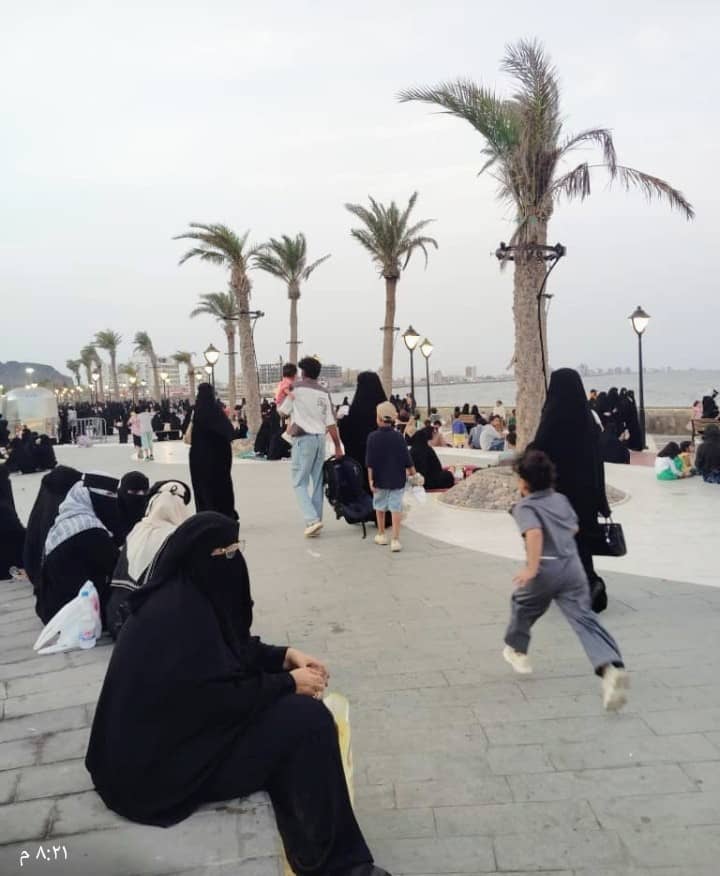
The garden was carefully organized, with neatly arranged trees, wide green spaces, and walkways filled with families. The scene blended beautifully with the sea, the nearby buildings, and the mountain rising quietly in the background. We sat there enjoying the view and the fresh air while children played around us. What caught my attention was that many women and girls were wearing jalabiyas, unlike in the past.
At eight in the evening, we returned to the hotel. Shortly afterward, my friend Oday Al Qadhi contacted me. He was accompanied by my friend, the intellectual Wadhah Sholan, and they invited me and the boys to dinner. They chose Al Rayyan Restaurant, known for its seafood.
The table was full of different kinds of fish. We talked, joked, and exchanged serious conversations. The dinner felt different, not because of the food alone, but because good company always adds its own flavor.
Afterward, I went to the Sheikh Abdullah neighborhood to say goodbye to Mohammed Shabeer and his brother Ali. The visit was brief, as exhaustion had overtaken me. I returned to the hotel physically drained, my voice hoarse from the changing weather and constant movement.
That night, I participated in a short segment on Al Salam International Channel, at the invitation of its director, the Syrian artist and writer Sabri Yousef, to speak about peace. The segment lasted about ten minutes, during which I tried to say what I could despite my exhaustion.
My family had already fallen asleep. I slept until six in the morning, then woke Elaf. We went out under light rain while fog covered the peaks of Mount Shamsan, giving the scene a sense of calm and stillness.
We went to Al Jumhour Restaurant in the Al Midan neighborhood and had liver with tawa bread and milky Adeni tea. After that, we went up to the Cisterns of Al Tawelah, an ancient landmark dating back to the fifteenth century BCE during the era of the Kingdom of Sheba.
The cisterns once numbered nearly fifty. The largest could hold around eighteen thousand cubic meters of water, and eighteen of them still stand today. They are considered among the oldest irrigation systems in the world, and the Lebanese traveler and writer Amin Al Rihani described them as among the most beautiful feats of engineering in the world.
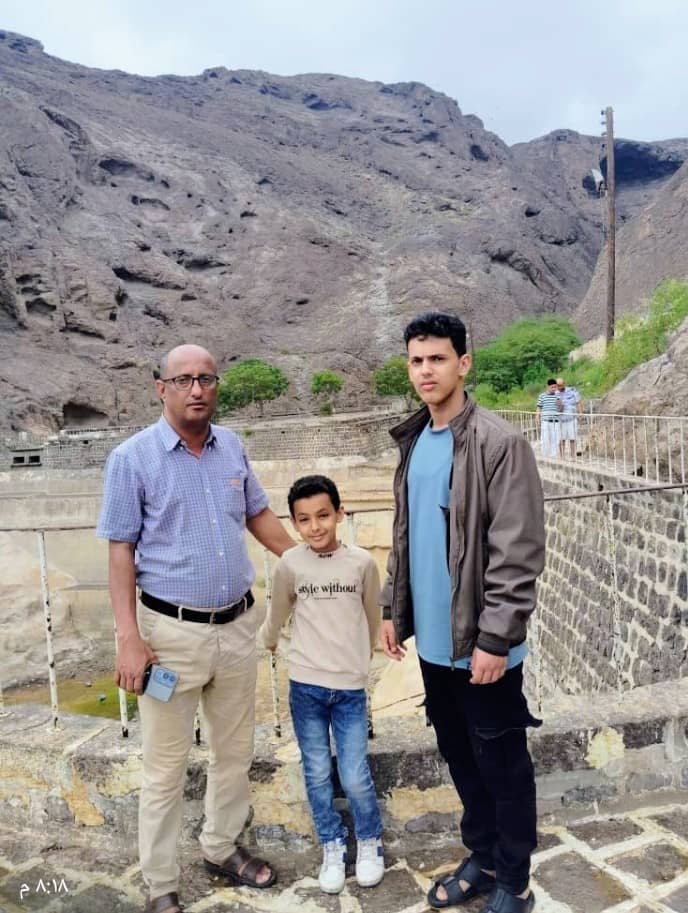
We had breakfast beneath the trees, walked around, and took photos before returning to the hotel. The family had woken up, and when Ayham realized that he had not come with us, he became upset and insisted on visiting the cisterns. We all went together, walked around, took photos, and returned.
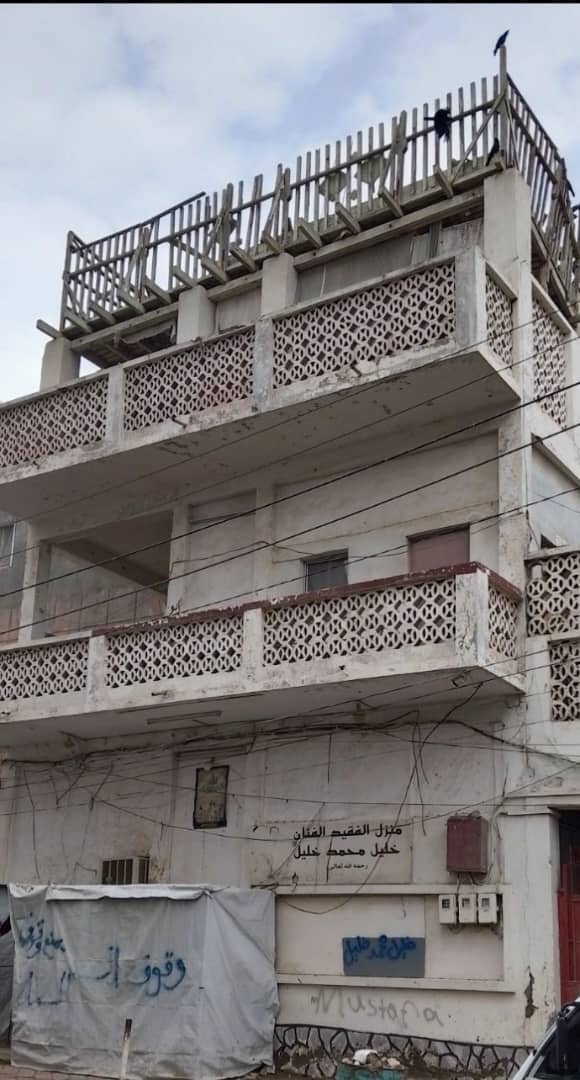
On our way back, I noticed the house of the late artist Khalil Mohammed Khalil and took several photographs of it. Khalil Mohammed Khalil, who lived from 1917 to 2009, was a pioneer of Adeni song and one of the pillars of Yemeni music. He was known as the Sayyid Darwish of Yemeni song for his role in shaping its modern identity. He began his career in 1937, founded the Aden Music Forum, and left behind enduring songs that remain alive in Yemeni memory.
We returned to the hotel to prepare for departure. During that time, my friend Oday contacted me again. I struggled to find words sufficient to express my gratitude for his generosity and warm hospitality throughout our stay.
At ten in the morning, he arrived at the hotel and took us to the Sana’a terminal, where he coordinated with the driver who would take us back. He did not simply see us off but made sure everything was in order before bidding us farewell with a sincere smile that reflected loyalty and friendship.
We left Aden around one in the afternoon but were delayed at the first checkpoint for half an hour. After that, we hurried along the road, racing against time to reach Morais checkpoint before it closed at five thirty. We did not stop for lunch, and I was carrying 21,500 riyals in the currency used in Aden.
As we approached Al Dhalea, heavy rain began to fall. The driver did not stop to exchange the currency, and we continued under the downpour. We reached Morais checkpoint just five minutes before it closed. Soon after, we were stopped again at new checkpoints and detained for more than an hour while boxes on the vehicle were inspected.
I stepped out of the car shivering from the cold and asked a soldier where I could exchange the currency to buy dinner, as I had nothing else. Unfortunately, the money was confiscated. Elyas had four thousand riyals in the Sana’a currency, which we used to have dinner in Morais.
After the checkpoint closed, traffic came to a complete halt. We continued alone on the road through darkness until we reached Yareem. We completed the remaining distance while the cold gnawed at our limbs and finally entered Sana’a after midnight, exhausted.
After this long, exhausting, and costly journey, we returned without completing the process. I handed the passport documents to my friend Oday to follow up on them. Elaf’s case remained unfinished due to the delay in the official statement.
I paused to reflect on the fatigue, the distance, the waiting, and everything we had endured. I asked myself how long this suffering would continue and how long the simplest of rights would remain out of reach.
Yet amid all this exhaustion, small moments of joy remained. The sea my children saw for the first time, the clouds of Dhamar that came so close, and their laughter despite everything reminded me that such moments are worth living and worth cherishing.